DataForge Platform
Alloy
The enforced pipeline architecture that scales cleanly, stays transparent, and enables customization where it matters.
Instead of every team designing their own pipeline patterns, Alloy provides a single, named layer model that every data pipeline follows — making platforms easier to build, operate, and extend over time.
Pipeline layers
Data Platforms Don't Fail on Volume.
They Fail on Chaos.
Most data platforms struggle to scale not because of data volume, but because of architectural inconsistency. As new pipelines are added, teams introduce new patterns, exceptions, and one-off designs — each one reasonable in isolation, collectively impossible to operate.
Without a defined and enforced architecture, every new requirement becomes a design exercise. Alloy was built for the opposite problem.
Custom Architecture
- Every pipeline designed differently
- Patterns multiply over time
- Onboarding requires tribal knowledge
- Rebuilds are expensive and disruptive
- Operational complexity grows faster than data volume
Alloy
- Single enforced architecture across every pipeline
- New pipelines inherit the model automatically
- Transparent, operable, and documented by default
- Rebuilds become incremental changes, not rewrites
- Complexity grows without multiplying workflows
What happens without enforced architecture
This is a real production data platform after years of custom pipeline development without a standardized architecture.
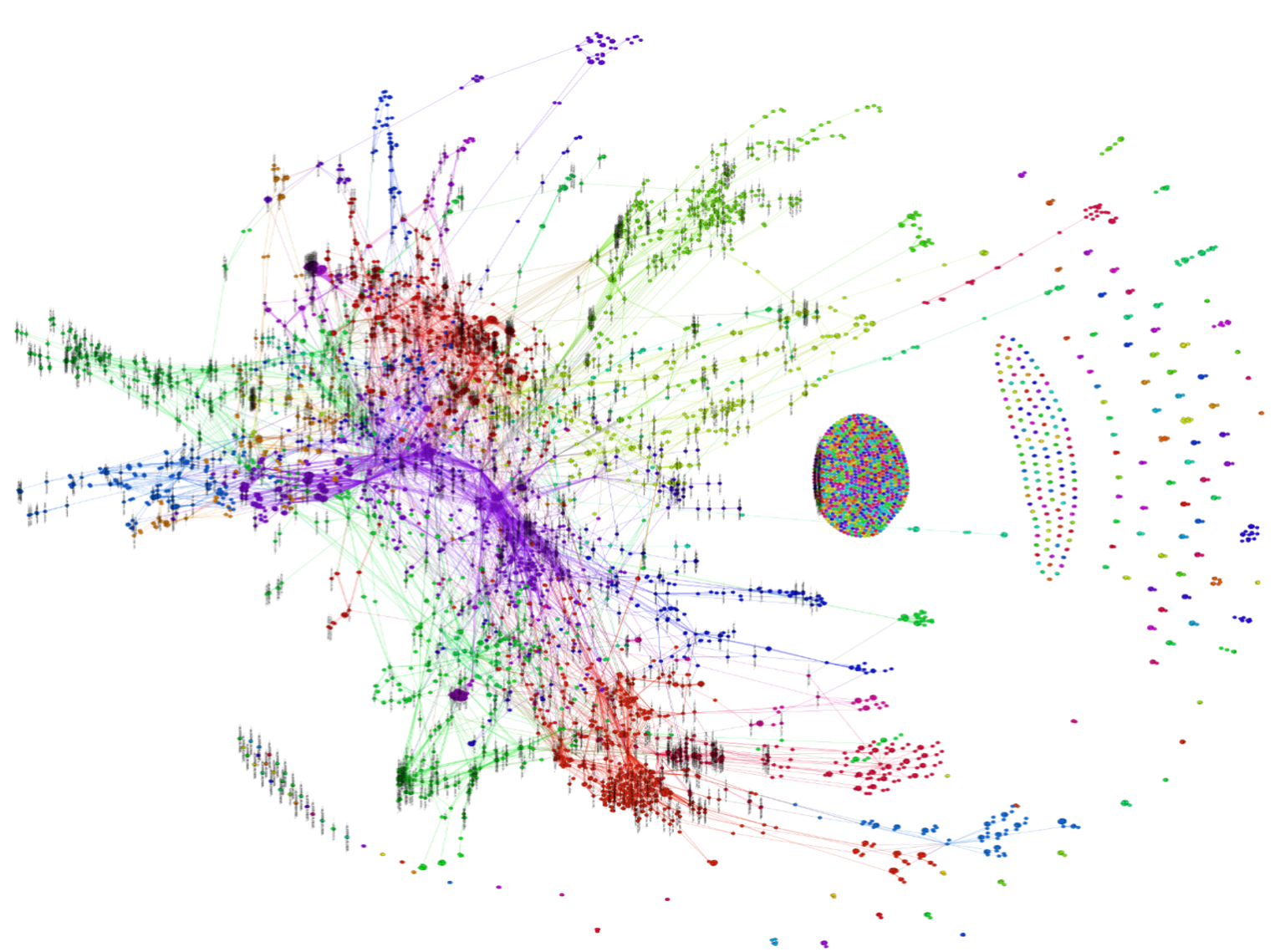
Each point represents a manually built code package.
Over time, systems like this become difficult to change, operate, or trust.
A Clear, Explicit Layered Architecture
Alloy enforces a single, named layer model that every data pipeline follows. Each layer has a clear purpose, and the boundaries between layers are explicit, so teams can understand and operate the platform without reverse-engineering hidden behavior.
The Alloy refinement process

No hidden layers. No implicit stages. No shortcuts.
Every pipeline moves through the same explicit architecture.
ORE
Raw source data enters the platform in its original form, providing a consistent and observable starting point.
MINERAL
Changes are detected and isolated so incremental processing is the default, not an optimization added later.
ALLOY
Data is enriched incrementally within a structured, repeatable transformation layer.
INGOT
Data is refined and consolidated into durable, reusable representations.
PRODUCT
Final outputs are delivered in a form optimized for analytics, applications, and downstream systems.
Incremental by Design
Most platforms treat incremental processing as a performance optimization added later. In Alloy, it is a foundational behavior — built into the architecture from the first layer so pipelines never waste compute reprocessing data that hasn't changed.
Ingest
Raw data lands in ORE exactly as received from the source — no transformation, no assumptions, no loss of fidelity.
Detect
Mineral isolates only the records that are new or changed — so the downstream enrichment step only ever processes the incremental batch.
Enrich
Alloy applies business logic — rules, relations, and validations — only to the changed records. The result merges into a hub table that is always current.
Predictable data movement
Data moves through the platform using consistent execution patterns, eliminating one-off workflows and hidden dependencies.
Incremental by default
Change detection runs at the Mineral layer — only new and changed records flow through enrichment. No reprocessing, no waste.
Transparent operations
Because execution follows a known structure, teams can reason about pipeline behavior, troubleshoot issues, and make changes without reverse-engineering custom logic.
Designed to scale without redesign
As new pipelines are added, they inherit the same execution model, preventing complexity from compounding over time.
Declarative Logic, Embedded in the Platform
Ember is the declarative knowledge layer of DataForge. It defines how data should be shaped, validated, and interpreted in a way that is reusable, consistent, and independent of any single pipeline.
By separating logic from execution, Ember allows organizations to scale their data platforms without duplicating code or re-implementing the same transformations across pipelines.
- Logic defined once: Transformations and rules are expressed declaratively, allowing the same logic to be reused across many pipelines without duplication or drift.
- Column-level precision: Logic is defined at the level of individual data attributes rather than entire tables, enabling fine-grained control while keeping pipelines simple and predictable.
- Organizational knowledge, captured: Ember encodes shared understanding about data meaning and behavior, turning business logic into a durable asset instead of tribal knowledge embedded in code.
- Guardrails for automation: Because logic is explicit and structured, Ember provides a reliable foundation for automation and AI-assisted workflows without introducing unpredictable behavior.
How Ember drives the Alloy pipeline
Pipeline Execution
Customization, Where It Belongs
DataForge handles the vast majority of data integration and transformation needs using its enforced architecture and declarative logic. For the cases that fall outside those patterns, DataForge provides carefully defined extension points where custom logic can be introduced without breaking the surrounding architecture.
Customization is explicit, not implicit
Custom logic is only introduced in designated parts of the pipeline, preventing hidden behavior and one-off patterns from spreading across the platform.
The architecture remains intact
Even when custom processes are required, they operate within Alloy's enforced layer model and execution structure.
Declarative first, code when necessary
Automated and declarative tools are the default path. Custom code is available for exceptional cases, not as a starting point.
No framework lock-in
Extension points accept any function returning a Spark DataFrame. Existing code fits with minimal changes — no base classes, no custom decorators required.
The vast majority of DataForge implementations require no custom code at all.
Ad-hoc custom code vs. DataForge SDK
Built for Automation, Not Guesswork
Alloy's enforced architecture and Ember's declarative logic create a data platform with explicit structure and governed behavior. Pipelines follow known patterns. Logic is reusable and governed. Execution is consistent and observable.
This foundation is what makes AI-assisted automation practical. Because the platform behaves consistently, a conversational AI interface can reason about change, understand intent, and safely propose or apply updates — without introducing hallucinations or fragile workflows.
AI works when the system underneath it is designed to be understood.
Talos is DataForge's AI-powered conversational interface that translates natural language into action — operating within the guardrails defined by Alloy and Ember, not bypassing them.
The DataForge Platform
Enforces a consistent, layered pipeline model across every data source — so platforms stay operable as they grow.
Defines transformations, rules, and validations declaratively — reusable logic that lives in the platform, not in custom code.
Translates natural language into pipeline actions — safely, within the guardrails Alloy and Ember define.
Solution guides
Evaluate DataForge by platform goal
Enterprise data platform
Enterprise data platform for governed analytics at scale
DataForge helps CDOs, CFOs, and data platform leaders scale analytics without assembling separate ETL, orchestration, observability, lineage, and cost-control tools.
Data pipeline platform
Data pipeline platform for complex enterprise source systems
DataForge helps data teams build, extend, orchestrate, and observe enterprise data pipelines while preserving a consistent architecture across every source and output.
Data engineering platform
Data engineering platform with architecture built in
DataForge gives data engineering teams a structured platform for pipeline logic, orchestration, observability, and governance without forcing data outside the client cloud.
Data orchestration platform
Data orchestration platform without manually assembled DAG sprawl
DataForge orchestrates data pipelines from structured pipeline definitions, dependency metadata, scheduling, and execution history instead of manually maintained DAGs.
Data observability platform
Data observability platform with lineage, quality, audit, and cost context
DataForge observability ties code, orchestration, quality rules, alerts, lineage, audit trails, and cloud cost visibility back to the platform metadata.